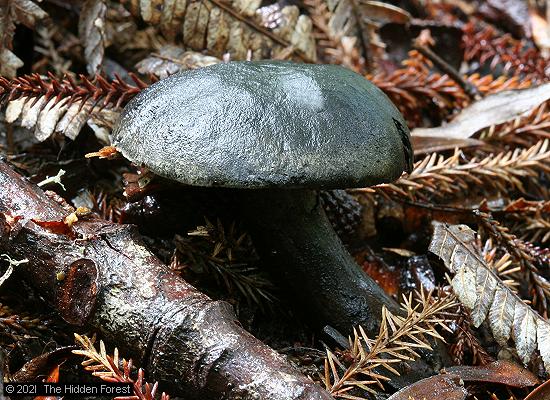
Neosarcodon carbonarius
(Maas Geest.) J.A. Cooper & T.W. May 2024
Description:
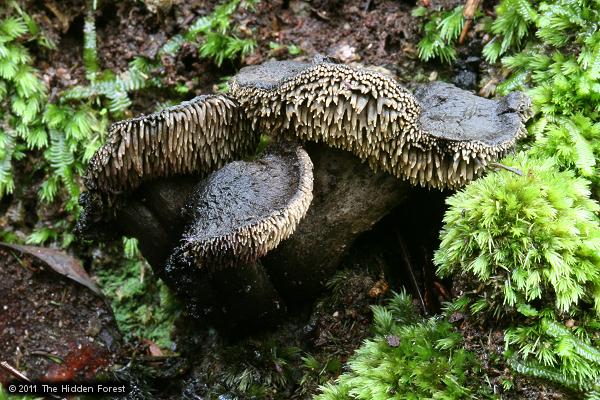
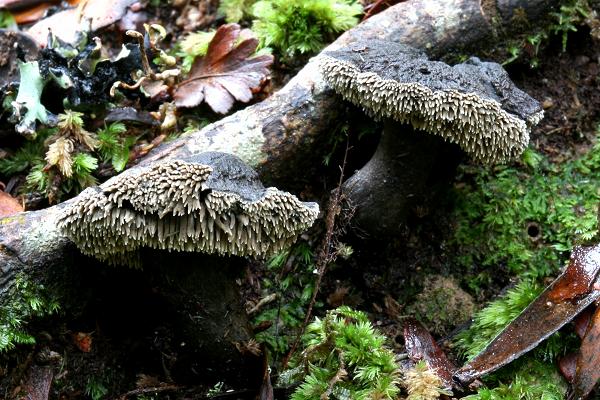
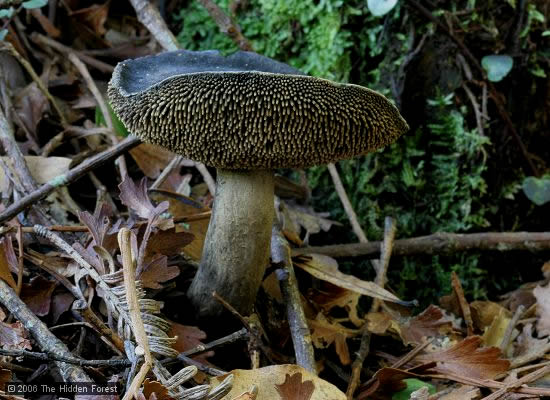
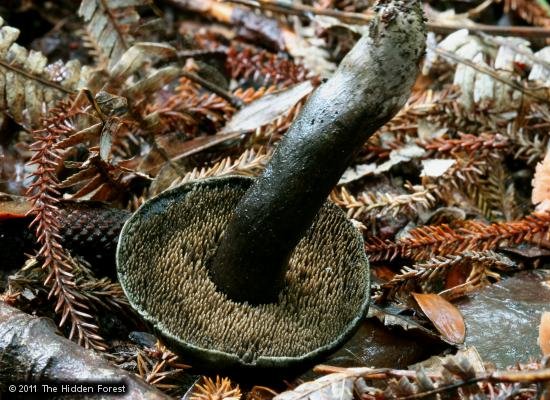
Neosarcodon carbonarius is a dark, soil-dwelling tooth fungus characterised by its sooty to charcoal-black cap, fine pale spines, and soft, thin flesh compared with the more robust Sarcodon species. The fruitbody often appears smoky, dusky, or soot-stained, giving rise to its name. A species that has been previously known as Sarcodon thwaitesii. Appears singly or in small, scattered groups.

Cap: 30-80 mm across; convex to irregular; surface dark grey to black, often velvety or finely tomentose; may show faint zonation or patchy paler areas.
Spines: short (1-3 mm), pale grey to whitish, darkening with age; fine and fragile; densely packed.
Stipe: short, often thick relative to cap size; dark grey-brown to black; sometimes slightly swollen at the base.
Context: soft to leathery, grey-brown, lacking the corky toughness of Hydnellum or Phellodon; may darken when cut.
Odour/taste: mild, earthy; lacking the strong odours sometimes found in Sarcodon.
Common name: none
Found: native forest
Substrate: fruits on soil, often among leaf litter, humus, or moss.
Season: autumn
Height: 75 mm
Width: 80 mm
Edible: no
Spores: brownish, ornamented with irregular tubercles or low warts; typically 6-8 µm long.
Basidia: 4‑spored, typical of Bankeraceae.
Hyphae: with clamp connections

Macro images:
Sarcodon carbonarius
Scale bar
Scale= 5 mm.
 
Neosarcodon carbonarius
Scale bar
Scale= 5 mm.
 
Neosarcodon carbonarius
Scale bar
Scale= 10 mm.
 
Neosarcodon carbonarius
Scale bar
Scale= 7 mm.
 
Neosarcodon carbonarius
Scale bar
Scale= 7 mm.
 
The Hidden Forest
Forest Fungi