(Berk.) G. Cunn.
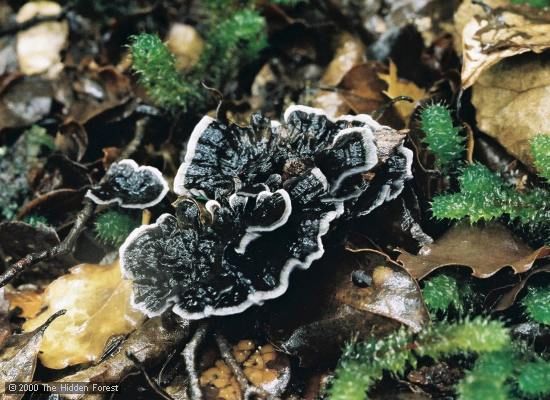
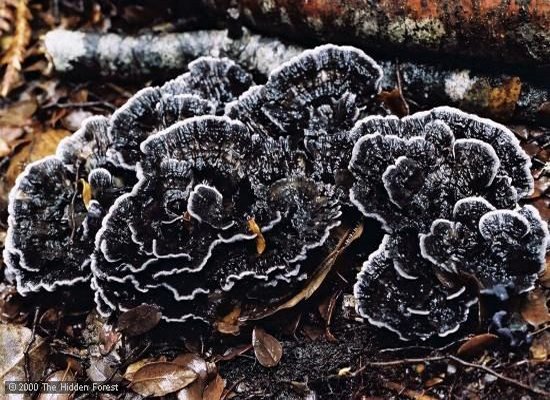
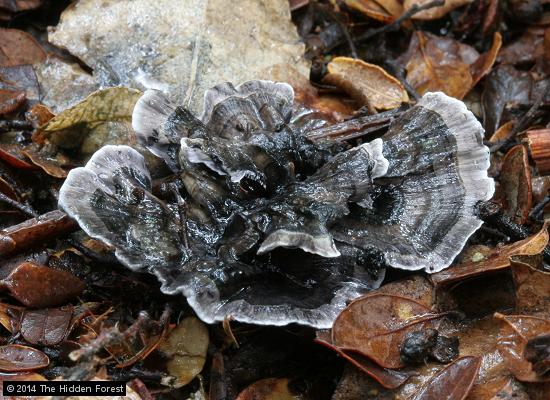
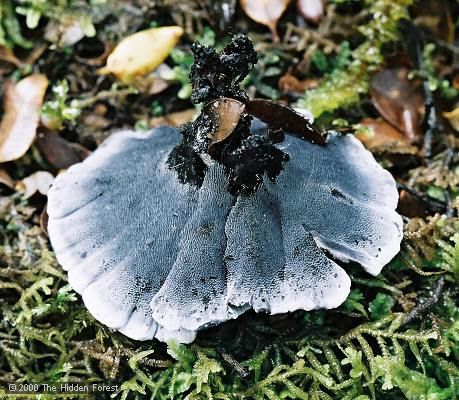
Phellodon sinclairii is a small, dark, leathery tooth fungus found on soil in native forest. It forms tough, corky fruitbodies with a dark brown to blackish cap, often velvety or finely tomentose, and a dense layer of short, pale spines beneath. The species is easily overlooked due to its size and sombre colours, but the combination of tough texture, dark cap, and short spines makes it distinctive once examined closely. This species is endemic to New Zealand, known mainly from southern beech (Nothofagus) forests, where it fruits among leaf litter and moss and appears singly or in small, scattered groups.
Cap: 15-40 mm across; circular to irregular; surface dark brown to black, often velvety, felted, or finely tomentose; may show faint zonation or paler margins.
Spines: short (1-2 mm), whitish to pale grey, darkening with age; densely packed; easily visible with a hand lens.
Stipe: short, thick, often poorly defined; dark brown to black; sometimes fused with neighbouring fruitbodies.
Context: very tough, corky, fibrous; dark brown to black; may stain slightly when cut.
Odour: faint, earthy; not distinctive.
Common name: none
Found: nothofagus forests
Substrate: fruits on soil
Season: autumn
Height: 45 mm
Cap width: 80 mm
Edible: no
Spore: brownish, ornamented (typically echinulate); 4-6 µm long
Basidia: 4-spored.
Hyphae: with clamp connections