Auriculariaceae
Common Names
Species Menu
Family Menu
Identification Guide
Fungi:> Basidiomycota:> Agaricomycetes:> Auriculariales:> Auriculariaceae:> Auricularia, Tremellochaete.
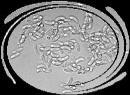
Auricularia SporesA family of wood‑rotting fungi producing gelatinous to leathery fruitbodies, often ear‑shaped or crust-like, found on dead wood in forests worldwide. Surfaces may be smooth, veined, or wrinkled, and colours range from pale brown to dark chocolate. Microscopically, they have septate basidia and sausage‑shaped spores. They play an important role in decomposing wood, and several species are edible and widely cultivated.
Genus: Auricularia
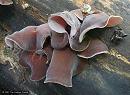
Auricularia is a genus of gelatinous, ear-shaped basidiomycetes, best known for their rubbery, translucent fruitbodies that grow on dead wood. Species range from pale and thin to thick, dark, and cartilaginous, but all share the same basic structure: a smooth, fertile underside and a finely hairy or velvety upper surface. When fresh, they are soft, flexible, and jelly-like; when dry, they become tough, leathery, and shrivelled, rehydrating readily with rain.
Auricularia corneaAuricularia cornea
Auricularia corneaAuricularia cornea (White)
Genus: Tremellochaete
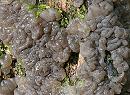
Tremellochaete is a genus of gelatinous, effused basidiomycetes in the Auriculariales, characterised by their thin, spreading, jelly-like fruitbodies that form patches or films on decaying wood. Unlike the lobed or ear-shaped Tremella species, Tremellochaete produces resupinate, closely adherent basidiomes that are often translucent, pale, and easily overlooked. The surface is usually smooth to slightly uneven, becoming firmer and more opaque as it dries.
Exidia novozealandicaTremellochaete novozealandica
 
The Hidden Forest     Forest Fungi