Tremellochaete novozealandica
(Lloyd) J.A. Cooper 2023
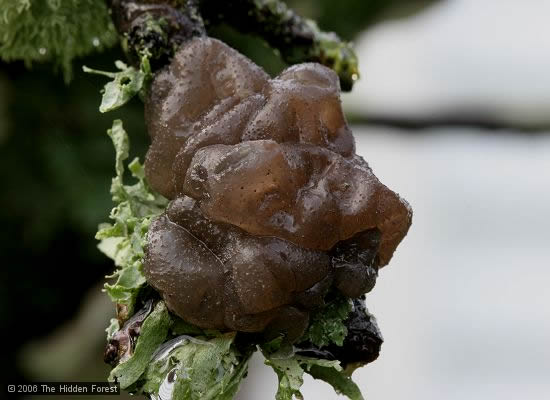
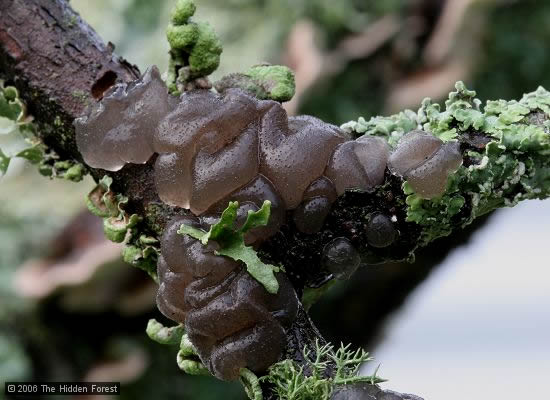
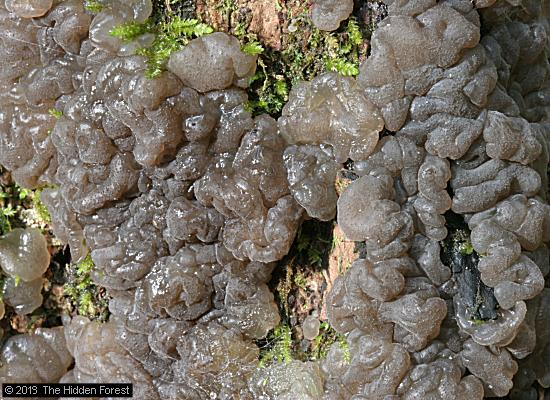
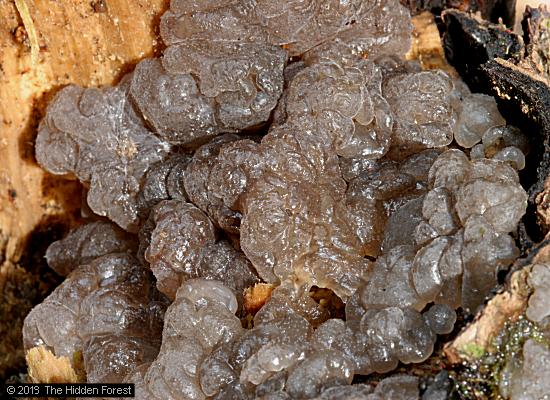
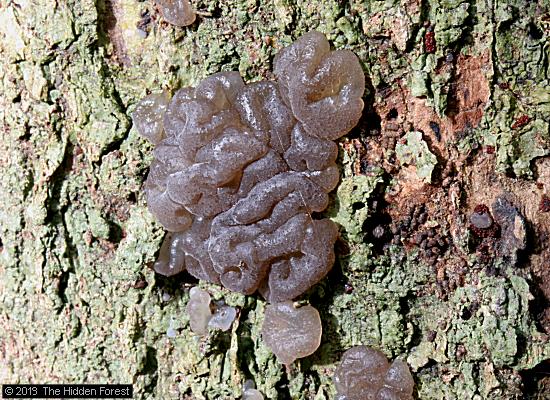
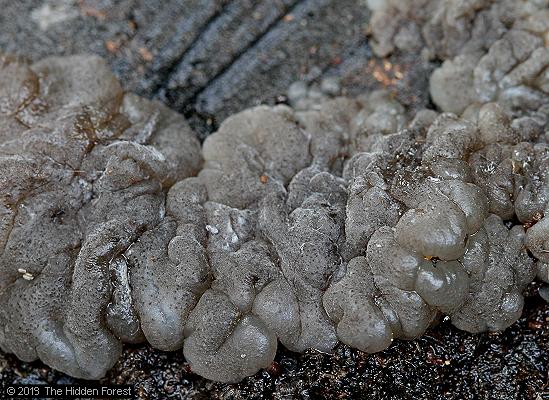
This is a thin, gelatinous, resupinate fungus forming soft, spreading patches on well‑decayed wood. Fresh fruitbodies are pale cream to translucent, with a smooth to slightly uneven surface and a distinctly jelly‑like texture. As they dry, they become firmer, more opaque, and may shrink slightly from the substrate. The species grows closely adherent to the wood, often forming irregular patches that merge into larger colonies. It is most easily found during wet periods in damp forest habitats, where the gelatinous texture is most pronounced.
Basidiome: thin, effused, gelatinous; forming patches 10–50 mm across; pale cream, whitish, or translucent when fresh.
Surface: smooth or faintly uneven; moist and jelly‑like; becomes firmer and duller when dry.
Margin: diffuse, thinning gradually into the wood; edges often difficult to see.
Context: soft, gelatinous; easily damaged; dries to a thin, rubbery film.
Odour/taste: none distinctive.
Common name: none
Found: native forest
Substrate: saprotrophic on well‑rotted wood
Season: autumn
Height: 10 mm
Width: 150 mm
Edible: no
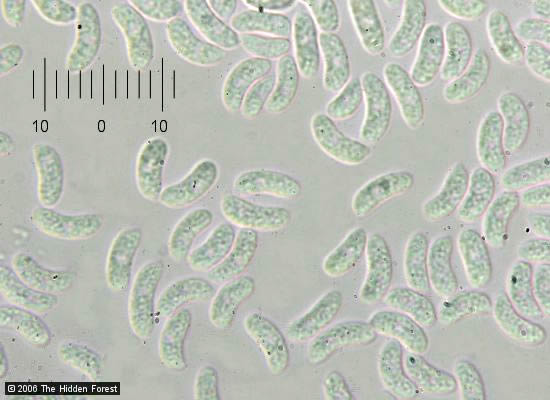
Spore: smooth, thin‑walled, broadly ellipsoid; typically 6-9 x 4-6 µm
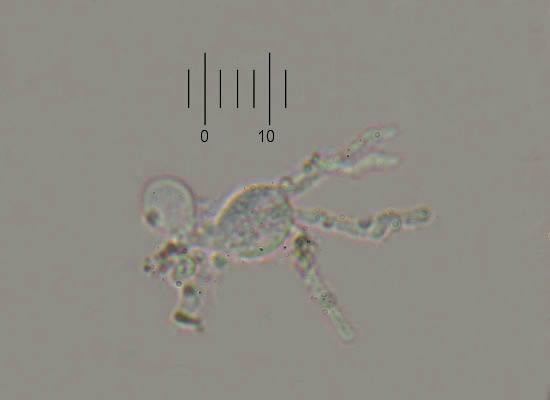
Basidia: tremelloid (globose to ellipsoid with vertical or oblique septa), diagnostic for the genus.
Hyphidia: abundant, embedded in the gelatinous matrix
Cystidia: clamped.