(Mont.) Sacc.
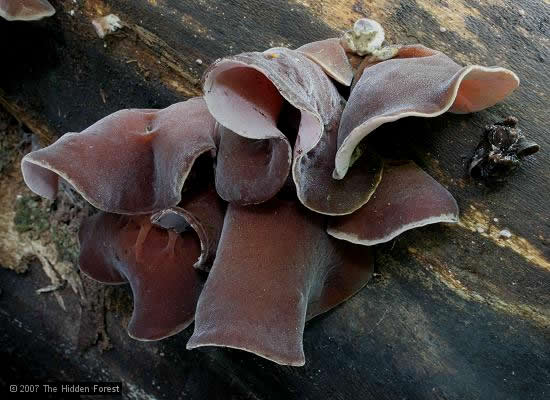
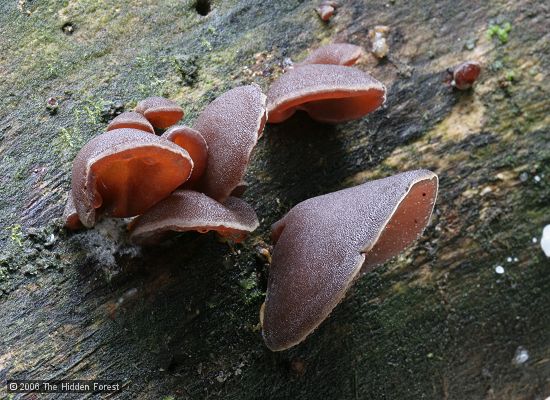
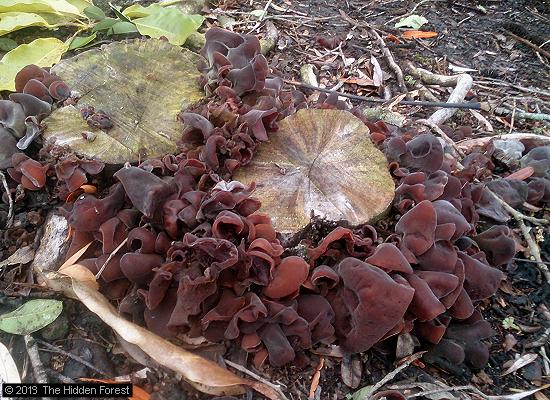
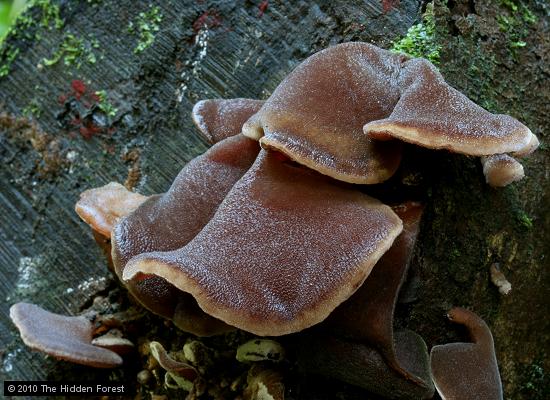
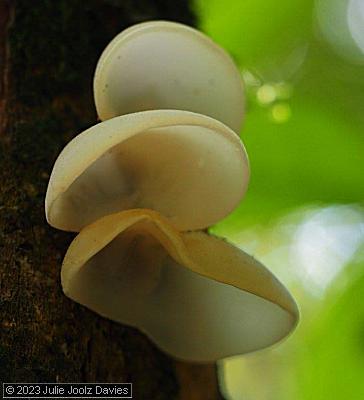
Auricularia cornea is a thick, dark, ear‑shaped gelatinous fungus found on dead wood throughout New Zealand. It forms rubbery, flexible fruitbodies with a smooth, grey‑brown underside and a finely hairy, velvety upper surface. When fresh, it is firm and cartilaginous; when dry, it becomes hard, leathery, and shrivelled, rehydrating readily with moisture. This is the only Auricularia species in New Zealand and most frequently encountered in gardens, parks, and native forest.
Fruitbody: ear‑shaped, cup‑like, or bracket‑like; thick, rubbery, gelatinous; 30-120 mm across; dark brown to blackish.
Upper surface: finely hairy, velvety, or tomentose; dark brown; often with a purplish or blackish tint.
Hymenium: smooth, pale grey‑brown to lilac‑brown; slightly translucent when wet.
Context: firm, cartilaginous, elastic; dries to a tough, leathery texture.
Odour/taste: mild, indistinct.
Common name: wood ear
Found: native forest urban forest remnants
Substrate: growing from wood
Season: Any time after rain
Height: 40 mm
Width: 40 - 150 mm
Edible: yes, used in stews
Spore: hyaline, allantoid (sausage‑shaped), typically 12-16 x 4-5 µm.
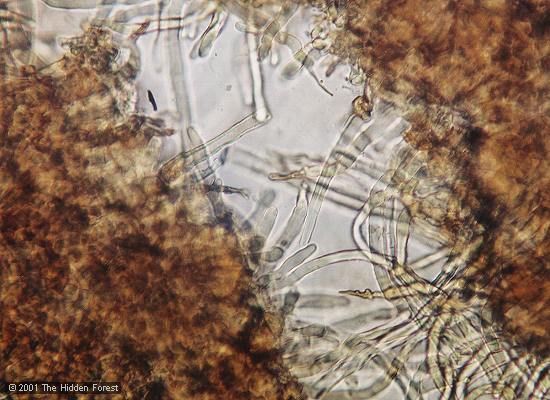
Basidia: auricularioid (laterally septate), characteristic of Auriculariaceae.
Hairs: short, brownish, giving the upper surface its velvety texture.