Amanita phalloides
(Fr.) Link
Description:
This is the species responsible for most deaths. Those who do survive eating these often need organ transplants. Extreme caution is required to avoid mistaking these for a edible species. Found under oak trees.

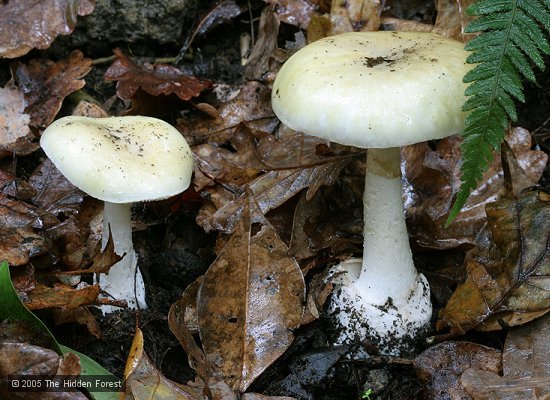
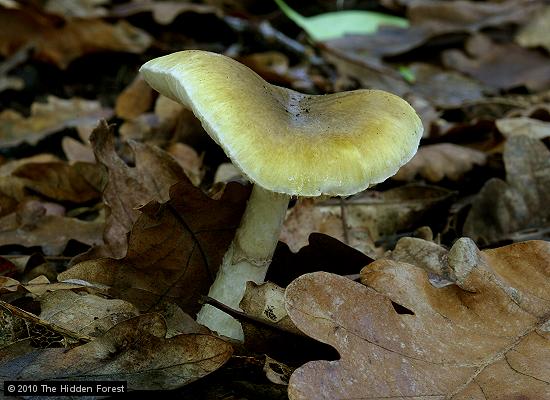
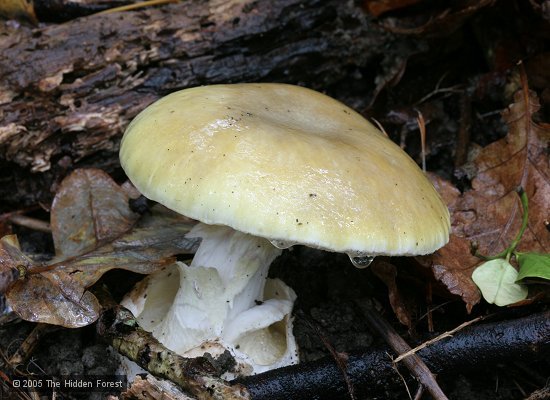
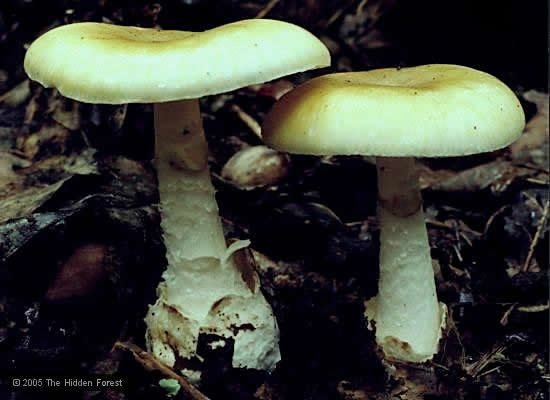
Cap: 40-150 mm diameter, convex to plano‑convex, sometimes slightly depressed. Colour olive‑green, yellow‑green, brownish‑green, or pale olive, often with a silky sheen. Surface smooth, viscid when wet, drying to a satiny gloss. Margin non‑striate. Universal‑veil remnants usually absent from the cap (unlike many Amanitas).
Gills: White, free, crowded. Short gills present.
Stipe: 80-150 mm tall x 10-20 mm thick, white to pale olive. Surface smooth to finely fibrillose. Ring large, white, membranous, persistent, often with a fluted or skirt‑like appearance.
Volva: A large, white, sac‑like volva enclosing the bulbous base-one of the most important diagnostic features. Volva often buried; careful excavation required.
Flesh: White, unchanging. Odour faint when young; sweet, sickly, or honey‑like in old specimens.

Common name: Death Cap
Habitat: Ectomycorrhizal with introduced, Oak, chestnut, European beech
Substrate: Ground
Distribution: North Island, especially in older plantings of oaks
Biostatus: Introduced, naturalised
Season: Summer to late autumn
Height: 110 mm
Width: 85 mm
Edible: Deadly Poisonous, Contains amatoxins which cause irreversible liver and kidney damage
Spore print: White
Macro images:
Scale bar
Scale= 15 mm.
 
Amanita phalloides
Scale bar
Scale= 10 mm.
 
Amanita phalloides
Scale bar
Scale= 10 mm.
 
Amanita phalloides
Scale bar
Scale= 10 mm.
 
Hidden Forest
Fores Fungi