(L.) Lam.
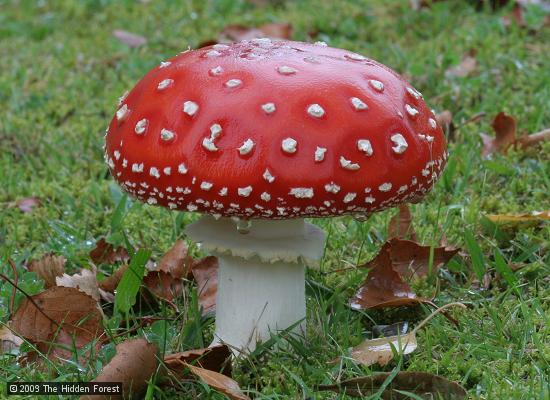
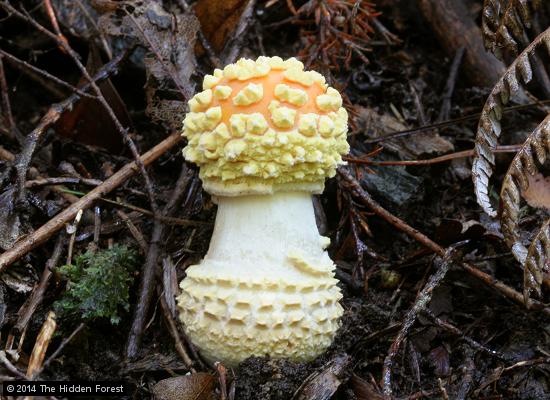
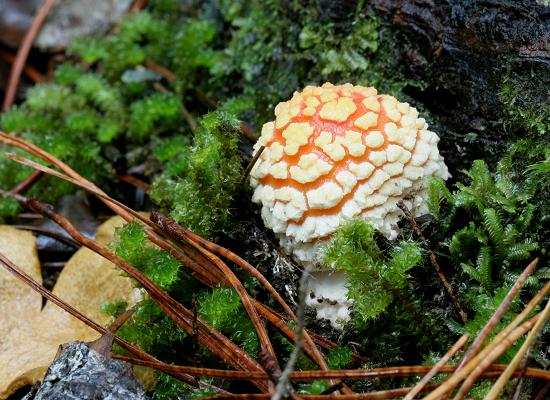
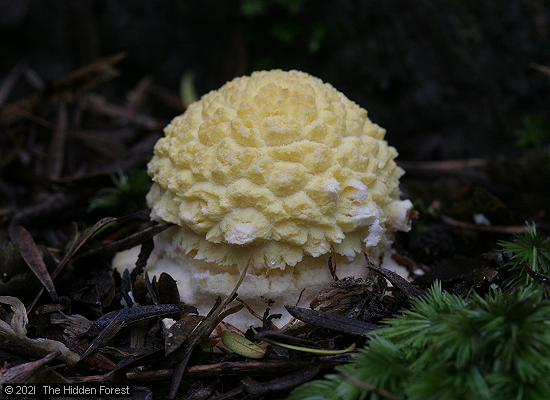
An introduced species, it is found commonly under pine, but also under eucalyptus, birch and native beech. When in the button stage, the universal veil is quite yellow, but soon fades to white as it develops. Under wet conditions, the rain can wash the colour from the cap, then it appears yellow/orange, without veil fragments. Considered poisonous, it can be made safe with some preparation, but it is hardly worth the trouble.
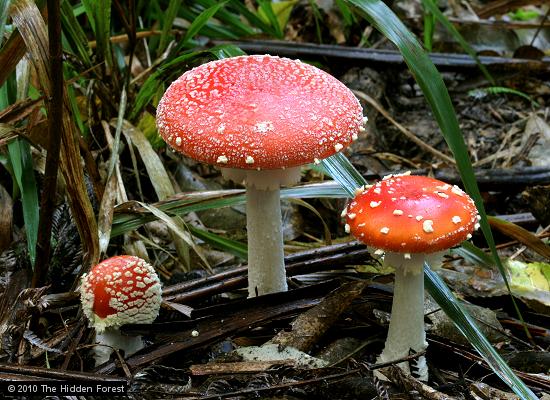
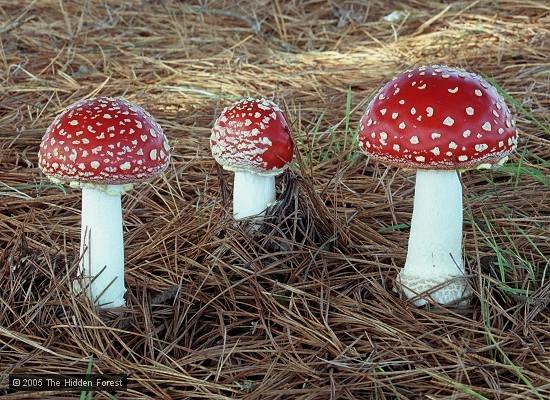
Cap: 60 - 350 mm in diameter, rounded at first to convex in age, surface viscid when moist; margin striate often with adhering partial veil fragments when young; cap red with white warts but washing out to yellow in rain.
Gills: white to cream, edges roughened.
Stipe: white, 70-160 mm long, 20 - 30 mm thick, tapering to a bulbous base; partial veil membranous, breaking to form a superior skirt-like veil. Volva consisting of two to three concentric rings at the stipe base.
Common name: Fly Agaric
Found: Exotic trees pines, eucalyptus, birch and beech
Substrate:On ground
Spore: White
Height: 60 - 150mm
Width: 50 - 250mm
Season: Autumn
Edible: Poisonous, Contains ibotenic acid and muscimol.