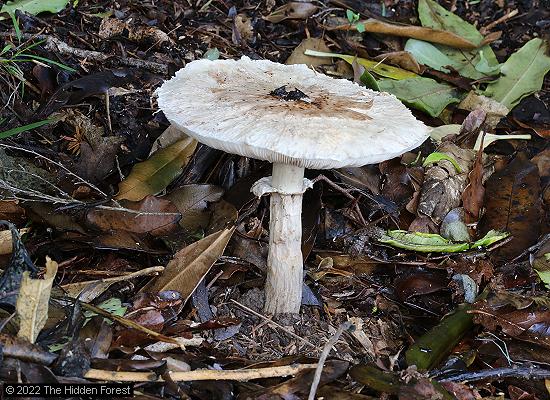
A robust, medium to large‑sized parasol mushroom with a thick, bulbous stipe base, coarse brown scales, and white flesh that slowly reddens when cut. Common in gardens, compost, woodchip beds, and other disturbed habitats. One of the most frequently encountered Chlorophyllum species in New Zealand.
Cap: 70-180 mm, convex to broadly convex, sometimes flattening with age. Surface white to pale cream, breaking into dense, brown, appressed scales, especially toward the center. Scales are typically more compact and less shaggy than in C. rhacodes. Flesh is white, slowly reddening or orange-browning when cut, especially in the stipe base. The margin is not striate, often remaining slightly inrolled in younger specimens.
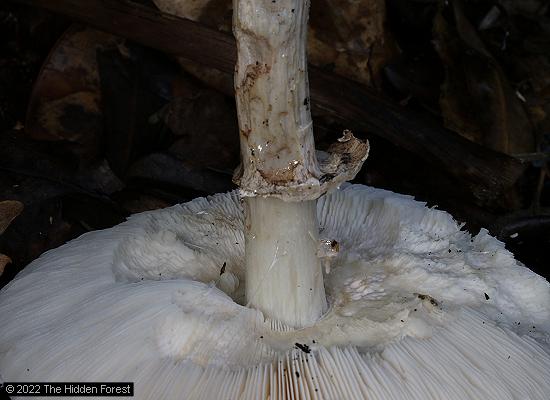
Gills: Free, crowded, broad. White, sometimes becoming cream with age. Do not turn green. Edges smooth.
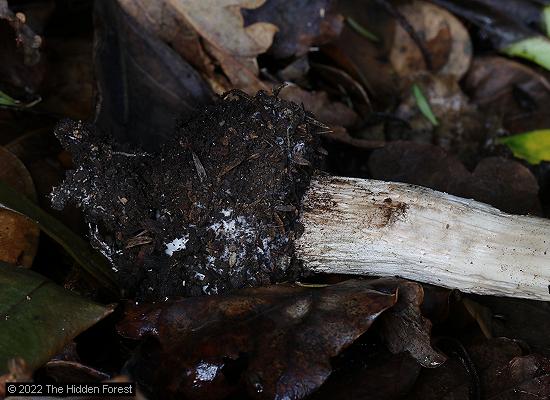
Stipe: 80-160 x 12-25 mm, stout, often distinctly bulbous at the base (a key character). Surface white, bruising orange-brown. Ring thick, persistent, single and sometimes movable with age. Context is firm, sometimes hollowing with age.
Common name: Brown Parasol.
Habitat: Compost, woodchips, and garden debris.
Substrate: Saprobic on soil.
Distribution: New Zealand wide.
Biostatus: Exotic.
Season: Spring to late autumn, often after rain.
Edible: Yes, some allergic reactions have been reported.
Spore print: White.