T. Macbr. 1922
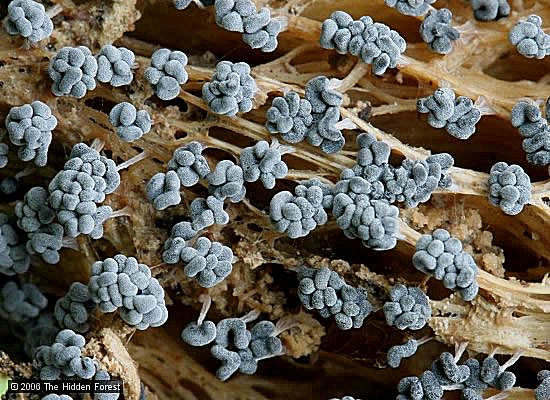
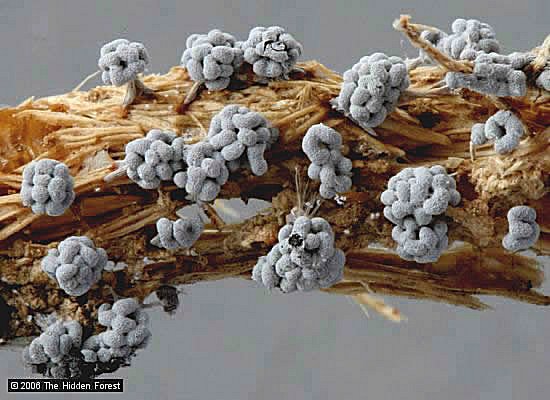
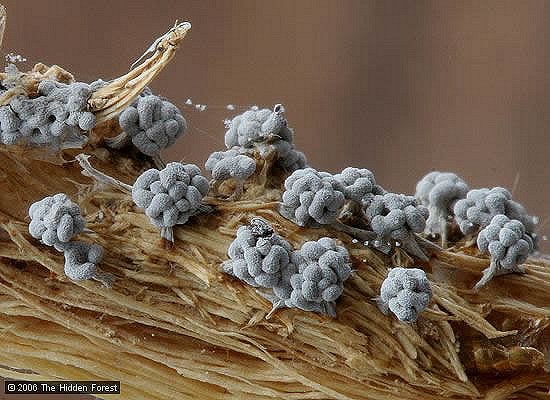
SPORANGIA: gregarious, sessile, stipitate, or even plasmodiocarpous;
when stipitate, depressed, varying at times to irregular reniform in
the same colony, or globose.
STALK: variable, generally tapering upward, always distinctly
deeply plicate-furrowed throughout, in color dark, opaque, sometimes
touched with white or gray, or white from a coating of calcareous
granules.
PERIDIUM: strongly calcareous, cinereouswhite.
CAPILLITIUM: abundant, the white lime-knots, varying in size and shape, connected by rather long hyaline threads, with here and
there an empty node.
This is a very variable species. Typical fruitings of mostly stalked sporangia usually can be recognised based on the small groups of compacted sporangia, but when these are not evident or the stalk itself is poorly developed, Physarum notable is often very difficult to identify. In the latter instance, the sporangia can resemble those of several other species, including P. leucophaeum or P. compressum.
SPORES: spore-mass black, by transmitted light dark,
sooty brown, minutely papillose, 10-11.5 µm.
PLASMODIUM: White or gray.
HABITAT: Decaying wood and bark.
DISTRIBUTION: South Canterbury and Southland. also known from Auckland